Mahakaleshwar Jyotirlinga in Ujjain is one of the most sacred Shiva temples in India and holds a special place among the 12 Jyotirlingas. The temple is not only famous for its powerful spiritual aura but also for its deep mythological roots and ancient history.
Located in Ujjain, Madhya Pradesh, Shri Mahakaleshwar Temple represents Lord Shiva in his “Mahakal” form — the Lord of Time and Death.
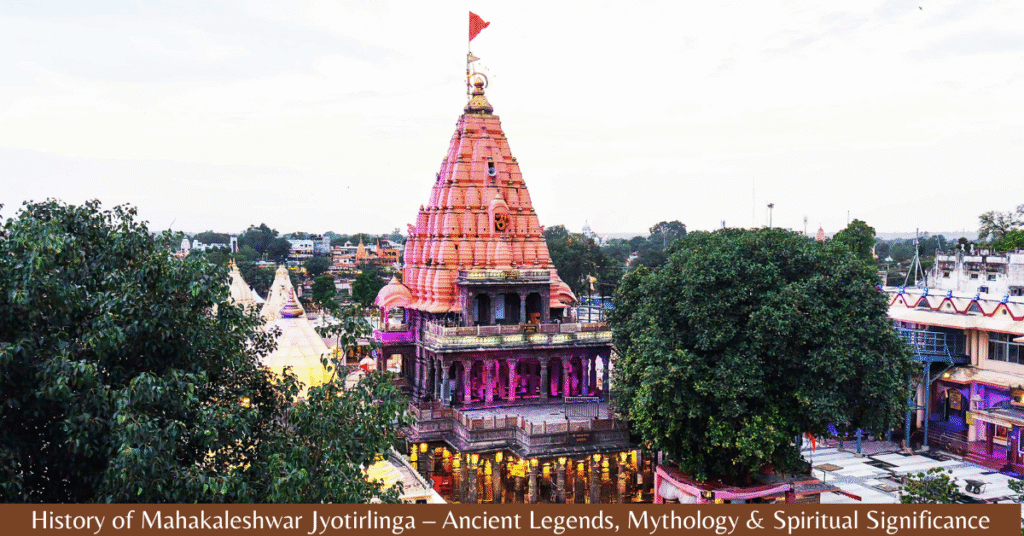
This article explores the origin, legends, Puranic references, and historical importance of Mahakaleshwar Jyotirlinga.
Meaning of “Mahakaleshwar”
The word Mahakal means:
• Maha = Great
• Kaal = Time
• Ishwar = Lord
Mahakal signifies the supreme controller of time, destiny, and death.
Unlike other Jyotirlingas, Mahakaleshwar faces south (Dakshinamukhi), symbolizing protection from negative energies and untimely death.
Mythological Story of Mahakaleshwar Jyotirlinga
According to the Shiva Purana, the legend begins in the ancient city of Avanti (present-day Ujjain).
A demon named Dushana began troubling the devotees and priests of the region. He attacked the holy city and disrupted religious practices.
A young devotee named Shrikar and a righteous king named Chandrasena were devoted followers of Lord Shiva.
When the demon tried to destroy the city, the devotees prayed intensely to Lord Shiva.
In response to their prayers, Lord Shiva appeared in a fierce form as Mahakal and destroyed the demon.
After defeating evil forces, Lord Shiva agreed to reside in Ujjain as Mahakaleshwar Jyotirlinga to protect devotees forever.
This is how the Mahakaleshwar Jyotirlinga manifested.
Why Mahakaleshwar Is Unique Among 12 Jyotirlingas
Mahakaleshwar has several unique characteristics:
• Only south-facing Jyotirlinga
• Daily Bhasma Aarti ritual
• Located in one of the seven sacred cities (Sapta Puri)
• Associated with time and cosmic energy
The south-facing form represents protection from death and fear.
For darshan guide, read:
Mahakaleshwar VIP Darshan Booking 2026 (internal link)
Historical Background of Mahakaleshwar Temple
The temple has ancient roots dating back to early centuries.
Important historical phases:
• Mentioned in ancient Hindu scriptures
• Patronized by Paramara dynasty
• Destroyed during medieval invasions
• Reconstructed during Maratha rule
• Renovated under Scindia dynasty
The present temple structure largely reflects Maratha architectural style.
Mahakaleshwar in Ancient Scriptures
Mahakaleshwar is mentioned in:
• Shiva Purana
• Skanda Purana
• Mahabharata
• Various regional texts
Ujjain was also a major center for astronomy and education in ancient India.
Spiritual Significance of Mahakal Form
Lord Shiva as Mahakal represents:
• Destruction of ego
• Control over time
• Liberation from fear
• Protection from negative forces
Devotees believe worshipping Mahakal removes obstacles and grants inner strength.
The daily Bhasma Aarti symbolizes detachment from worldly illusions.
For Bhasma Aarti guide, read:
Mahakaleshwar Bhasma Aarti 2026 (internal link)
Ujjain as a Sacred City (Sapta Puri)
Ujjain is one of the seven Moksha-giving cities in Hindu tradition.
Sapta Puri includes:
• Ayodhya
• Mathura
• Haridwar
• Kashi
• Kanchipuram
• Ujjain
• Dwarka
Being part of Sapta Puri enhances Mahakaleshwar’s spiritual importance.
Mahakaleshwar and Kaal Concept in Hinduism
“Kaal” means time, which governs life and death.
Mahakal symbolizes:
• The eternal beyond time
• The destroyer of death
• The cosmic regulator
This philosophical aspect makes Mahakaleshwar spiritually profound.
Role of Mahakaleshwar During Shravan & Mahashivratri
During Shravan month and Mahashivratri:
• Lakhs of devotees visit
• Special rituals are performed
• Temple remains highly active
For festival guide, upcoming article will cover Mahashivratri in detail.
Frequently Asked Questions
Who built Mahakaleshwar Temple?
The temple was rebuilt and renovated by Maratha rulers, especially Ranoji Scindia.
Why is Mahakaleshwar south-facing?
It symbolizes protection from untimely death and negative forces.
Is Mahakaleshwar mentioned in Puranas?
Yes, it is mentioned in Shiva Purana and Skanda Purana.
Why is Mahakal considered powerful?
Because it represents Lord Shiva as the controller of time and destiny.
Final Thoughts
Mahakaleshwar Jyotirlinga is not just a temple but a symbol of cosmic power, protection, and spiritual awakening. Its mythological roots, historical significance, and daily rituals make it one of the most unique Shiva temples in India.
For planning your visit, also read:
• Mahakaleshwar VIP Darshan Booking 2026
• Mahakaleshwar Bhasma Aarti 2026
• Mahakaleshwar Temple Timings 2026